Sonntag, 31. Juli 2022

And it isn’t just absolute demand. Even as a share of the world’s primary energy, coal consumption remains robust. Last year, coal accounted for 27% of the world’s primary energy, a couple of percentage points higher than two decades ago, and about the same level as 50 years ago.


Coal Is Still King of the Energy System: Elements by Javier Blas

Consumption of the most-polluting fossil fuel on course to set record in 2023
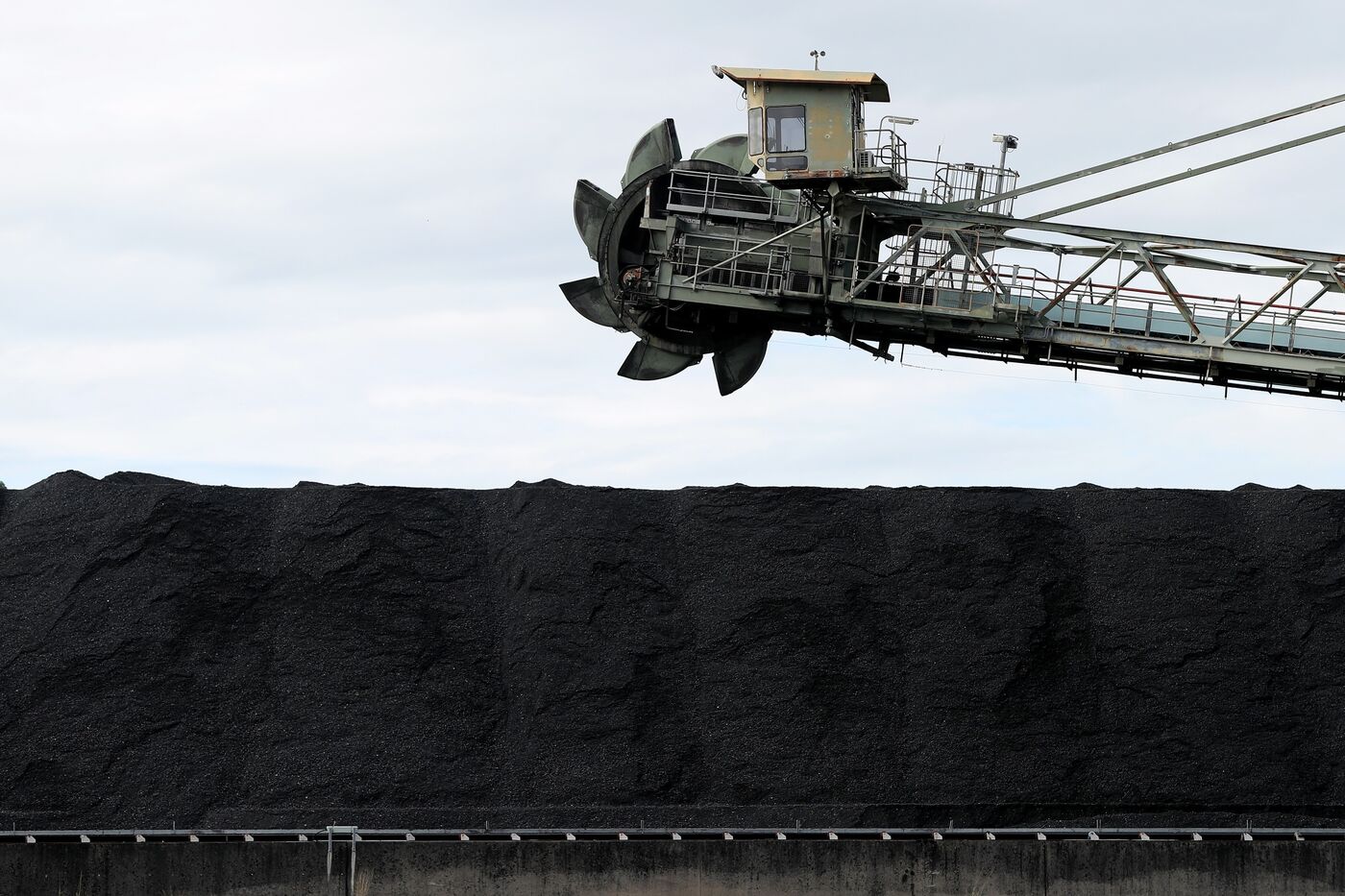
Eraring Power Station As Australia Is Transforming Grids Away From Coal Power
Photographer: Brendon Thorne/Bloomberg

Hi, I’m Javier Blas and this is today’s edition of Elements, Bloomberg’s new energy and commodities newsletter. We bring you a daily mix of commentary from Bloomberg Opinion writers and the best of our market-leading news coverage. We hope you’re enjoying it, and if you haven’t yet signed up to get it direct into your inbox, you can do that here. 

Today’s Take: Coal is still king 

This Sunday marks the 110th anniversary of the beginning of one of the most important energy transitions. On July 31, 1912, Winston Churchill, then Britain’s First Lord of the Admiralty, established a Royal Commission on Fuels and Engines to explore shifting the Royal Navy from coal to fuel oil.

Churchill convinced the navy to abandon coal-fired steam boilers. And over the next century, the world energy map transformed itself, first through the rise of oil and later to solar and wind power. The ecological movement became a major political force, pushing the fight against climate change.

And coal? It’s still there, king as always.

The International Energy Agency this week said global coal demand in 2022 will match the all-time high set in 2013 of about 8 billion metric tons. And next year, coal consumption will set a fresh record high.

It bears repeating: global demand for coal, the most-polluting fossil fuel, is still rising. The gap between the reality of the coal market and the well-intentioned words uttered at climate conferences has never been wider.

And it isn’t just absolute demand. Even as a share of the world’s primary energy, coal consumption remains robust. Last year, coal accounted for 27% of the world’s primary energy, a couple of percentage points higher than two decades ago, and about the same level as 50 years ago.

With demand rising – in part due to Russia’s invasion of Ukraine – and supply stagnant, the world is paying  a steep financial cost for coal alongside the environmental toll. In Europe, coal prices this week surged to a record above $400 per ton.

As important as the surge in spot prices is the fact that the whole forward curve has moved much higher in recent weeks. If in March, just after Russia’s attack, the market saw a short-term rally, now it’s betting on sustained high prices through the rest of 2022, into 2023 and even 2024.

It’s an increasingly expensive addiction the world just can’t seem to kick.

--Javier Blas, Bloomberg Opinion

Bank of England $1 Billion Gold Cache Not Maduro’s, Says Judge London judge ruled not to accept Venezuela court decision Ruling bolsters UK decision to not recognize Maduro as leader


Bank of England $1 Billion Gold Cache Not Maduro’s, Says Judge

  • London judge ruled not to accept Venezuela court decision
  • Ruling bolsters UK decision to not recognize Maduro as leader
Updated on

Venezuela’s opposition leader Juan Guaido is one step closer to getting his hands on more than $1 billion of gold stashed away in the Bank of England’s vaults after a London judge decided not to recognize a Venezuelan court decision that President Nicolas Maduro should have it.

The long-running case has been heard by several UK courts since Maduro sued the bank for access to the bullion, claiming it was needed for a Covid-19 relief fund, according to court filings. Guaido, however, also claimed to be the man in charge of the bank, with his attorneys saying he needed the stash of gold to help future generations of Venezuelans.

Judges said in December 2021 that a lower court needed to decide whether a Venezuelan government-controlled court decision should also be taken into account in deciding who ultimately controls the gold.

“I conclude that there is no basis for the recognition of the judgments upon which the Maduro Board relies,” Judge Cockerill said in the Friday judgment. “The Guaido Board therefore succeeds.”

The ruling bolsters the British government’s decision to essentially recognize Guaido as the South American country’s leader. The UK’s then-foreign secretary Dominic Raab said ahead of the December hearing that his government had formally recognized Guaido as interim president in all respects since 2019, according to documents prepared for the case.

Guaido applauded the ruling in a statement Friday, writing that the decision is “another step in the process of protecting Venezuela’s international gold reserves and preserving them for the Venezuelan people.”

The Venezuelan government said it intends to appeal. “The Venezuelan state will continue to defend its interests, protecting and guaranteeing the rights of all Venezuelans,” said Vice President Delcy Rodriguez, speaking on state television. 

A hearing, likely to be in October, will decide which issues remain in the litigation, according to Maduro’s legal team.

— With assistance by Jonathan Browning, and Andreina Itriago Acosta

(Adds Guaido statement in sixth paragraph, Maduro’s plan to appeal in seventh

In June, the state company Petróleos de Venezuela (PDVSA) exported an average of 630,500 barrels of crude and fuel per day, an increase of 61% in its oil exports, mainly due to the first shipments of Venezuelan crude to Europe in two years.

 In June, the state company Petróleos de Venezuela (PDVSA) exported an average of 630,500 barrels of crude and fuel per day, an increase of 61% in its oil exports, mainly due to the first shipments of Venezuelan crude to Europe in two years.

The Spanish oil company Repsol resumed shipments of Venezuelan crude oil to Europe after a two-year pause, according to the specialized portal Argusmedia. "The Spanish integrated company Repsol resumed the oil supply agreement in exchange for Venezuelan debt", as reported by the British portal.

RELATED:

Venezuelan Economy Grows 12.3% in Q1 2022

The report adds that, in the month of July, Repsol's imports from the Bolivarian country reached some 3 million barrels per day.

 Repsol stopped importing Venezuelan crude in September 2020 to comply with the sanctions imposed by the United States on the Venezuelan oil industry.

The British news agency Reuters reported on June 5 that the U.S. State Department had sent letters to the oil companies Eni SpA, of Italy, and Repsol SA, of Spain, announcing that they may begin shipments of Venezuelan crude to Europe as of this July.

The United States has granted exemptions to Venezuelan crude oil to alleviate the crisis generated after asking the European Union (EU) to cut imports of crude oil and gas from Russia to pressure it for its special military operation in Ukraine.

In June, the state company Petróleos de Venezuela (PDVSA) exported an average of 630,500 barrels of crude and fuel per day, an increase of 61% in its oil exports, mainly due to the first shipments of Venezuelan crude to Europe in two years.

senegal

  Markets IMF Draws Packed Senegal Session as New Program Talks Drag By  Vinicius Andrade  and  Jorgelina Do Rosario April 20, 2026 at 5:01 ...