Donnerstag, 10. März 2022

Senator Marco Rubio, a Florida Republican, plans to introduce a bill this week that would ban U.S. imports of oil from Venezuela and Iran


Biden Team Open to Easing Economic Restrictions on Venezuela

  • U.S. wants to see progress in talks between Maduro, opposition
  • With Russian oil cut off, Venezuela seen as potential supplier
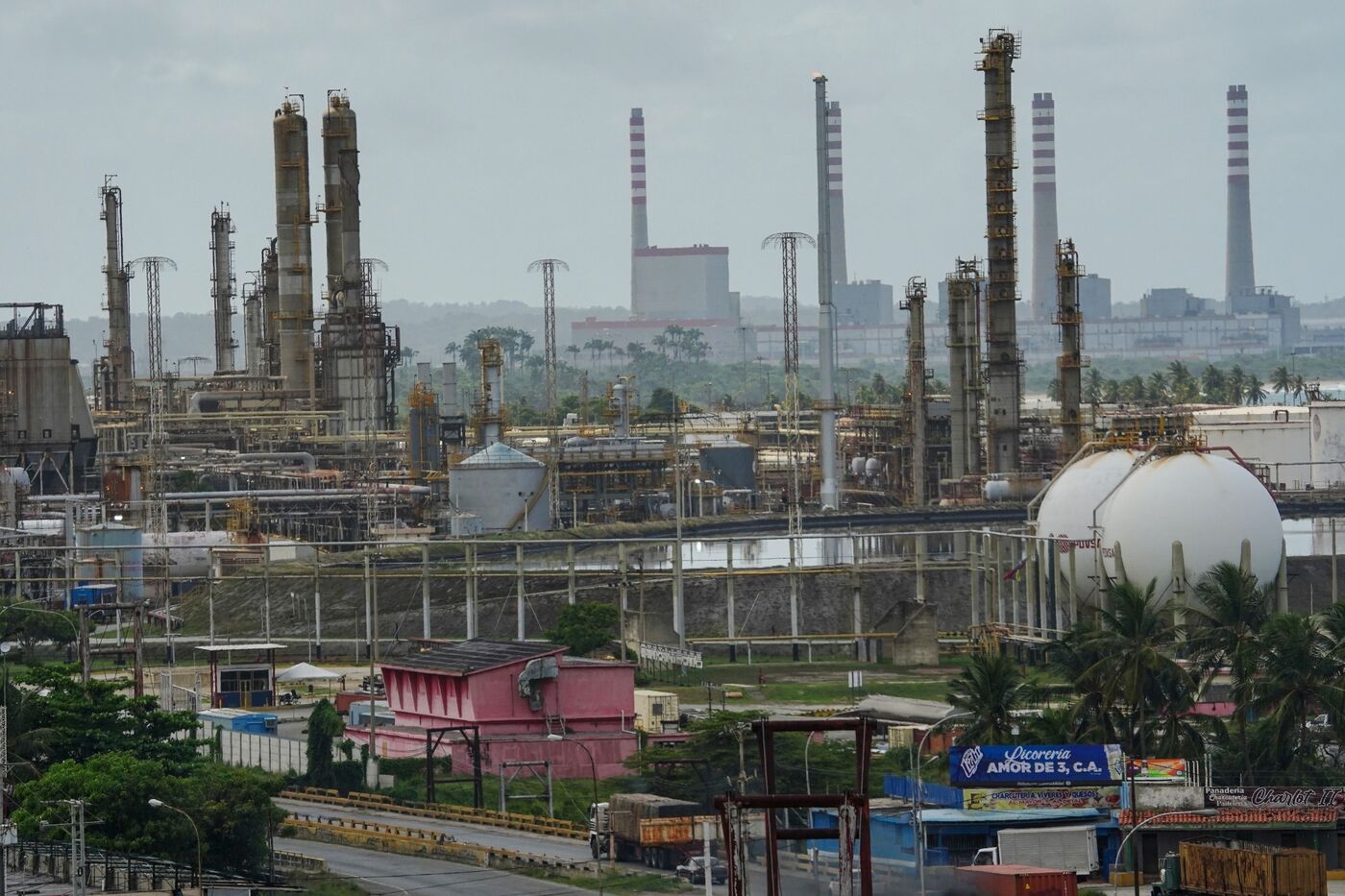
The Petroleos de Venezuela SA (PDVSA) El Palito refinery in El Palito, Venezuela, on March 9. 
The Petroleos de Venezuela SA (PDVSA) El Palito refinery in El Palito, Venezuela, on March 9. Photographer: Manaure Quintero/Bloomberg
Updated on

The U.S is willing to relax economic pressure on Venezuela depending on the outcome of upcoming talks between President Nicolas Maduro and the opposition, according to a senior Biden administration official. 

The comments indicate President Joe Biden wants to see progress toward restoring democratic governance before allowing Venezuela to increase oil exports to the U.S. amid a global supply crunch triggered by Russia’s invasion of Ukraine. 

A U.S. delegation informed Venezuelan officials of its position during a rare meeting Saturday, the senior administration official told reporters on a conference call. American officials discussed the release of two American political prisoners and urged Maduro to return to the negotiations with opposition leaders. 

Discussions about the oil trade are happening on a broader level and U.S. officials did not commit to any relaxation of sanctions, nor did they agree to a quid pro quo involving sanctions relief for the prisoners’ release, the official said. 

White House Press Secretary Jen Psaki on Thursday downplayed the likelihood the U.S. would lift oil sanctions on Venezuela anytime soon.

“As you are assessing how to spend your energies in this time of a lot of news in the world, I would not focus a lot of them on conversations about the future of the United States importing oil, at this point in time, from Venezuela,” she said during a press briefing.

Days after the meeting, Maduro released former Citgo executive Gustavo Cardenas, a U.S. citizen, and Jorge Fernandez, a Cuban-American. The Venezuelan leader on Monday said that the format talks with the opposition, which began last year in Mexico and have have been suspended for months, should be reconsidered. 

Earlier: Venezuela Releases Two U.S. Political Prisoners After Talks 

Venezuela has been under economic and oil sanctions since 2019, when the U.S. and other nations recognized opposition leader Juan Guaido as the country’s legitimate president following allegations of election rigging. The White House’s re-engagement with the Maduro government comes as its seeking to woo Russia’s allies in the Western Hemisphere following Vladimir Putin’s invasion of Ukraine. 

Any move to resume imports of Venezuelan oil would rile Biden critics, who have accused him of seeking oil from U.S. adversaries instead of strengthening domestic production. 

The U.S., in theory at least, still regards Guaido as Venezuela’s rightful leader and has accused the Maduro government of human rights violations and provoking a humanitarian crisis.

Senator Marco Rubio, a Florida Republican, plans to introduce a bill this week that would ban U.S. imports of oil from Venezuela and Iran

Senate Foreign Relations Committee Chairman Bob Menendez, a New Jersey Democrat and a Biden ally, urged the president not to resume oil shipments from Venezuela. 

“Nicolas Maduro is a cancer to our hemisphere and we should not breathe new life into his reign of torture and murder,” Menendez Monday said in a statement.

U.S. policy regarding Venezuela is likely to come up during a meeting at the White House on Thursday between Biden and President Ivan Duque of Colombia. His government has expressed concern over the U.S. overture to Caracas. Duque on Wednesday labeled Maduro “a war criminal.”

(adds quote from Psaki in sixth paragraph

Keine Kommentare:

Kommentar veröffentlichen

Gabon Bonds Post Biggest Selloff in Year After IMF Flags Debt Woes By Ray Ndlovu April 15, 2026 at 1:22 PM GMT+2 Save Translate Listen 2:20 Takeaways by Bloomberg AI Hide Gabon’s dollar bonds sold off after the International Monetary Fund’s latest report indicated the country is facing worse budget pressures than expected. The country's dollar-denominated bonds were the worst performers across emerging markets, with its notes due in 2031, 2031, and 2029 shedding more than 2.5 to three cents. The IMF report projected Gabon’s deficit at 10% this year, compared to last year’s 8.5%, with the gap expected to widen further to 11.2% in 2027 and to 12% in 2028. Gabon’s dollar bonds sold off the most in more than a year after the International Monetary Fund’s latest report indicated the country is facing worse budget pressures than expected. The central African nation’s three dollar-denominated bonds were the worst performers across emerging markets on Wednesday, bucking positive sentiment spurred elsewhere by hopes of a peace deal in the Middle East. Its notes due February 2031 fell more than three cents to trade at 84.97 cents on the dollar as of 12:15 a.m. in London, according to CBBT composite pricing. The yield jumped to 10.7%, having fallen into the single digits earlier this week for the first time since late 2024. Securities maturing July 2031 and in 2029 shed more than 2.5 cents, while Gabon’s yield spread over Treasuries widened by 86 basis points to 760 basis points, according to indicative intraday data from a JPMorgan Chase & Co index. Gabon's Dollar Bond Drops on Budget Fears Bonds had risen on higher oil, IMF deal hopes Note: CBBT composite pricing data used Source: Bloomberg The selloff follows the release of the IMF’s World Economic Outlook report which showed a worsening financial position in Gabon. While Gabon — a member of the Organization of the Petroleum Exporting Countries — benefits from higher oil prices, the report projected the country’s deficit at 10% this year, compared to last year’s 8.5%. The gap is expected to widen further to 11.2% in 2027 and to 12% in 2028, according to the IMF. These projections are wider than what Gabon had previously revealed, said Leo Morawiecki, an emerging markets analyst at Abrdn Investments Ltd. He noted that the new projections come shortly after Gabon formally requested an IMF program, and confirm investors’ fears it had been underclubbing its budget woes. “I always thought they were under reporting their fiscal and debt numbers,” Morawiecki said. “Gabon is now being transparent in the hope it will get them an IMF deal.” Read: Gabon’s Dollar Bonds Rally After Country Seeks New IMF Program Gabon is due to hold discussions about its financing program at this week’s IMF/World Bank Spring Meetings. President Brice Oligui Nguema had instructed his finance minister Thierry Minkoto in February to speed up efforts to secure the program over the next three months. The Next Africa newsletter runs every weekday. Sign up here for the newsletter, and subscribe to the Next Africa podcast on Apple, Spotify or anywhere you listen.bon

  Gabon Bonds Post Biggest Selloff in Year After IMF Flags Debt Woes By  Ray Ndlovu April 15, 2026 at 1:22 PM GMT+2 Save Translate Listen 2:...